Introduction:
A Moremi Game Reserve safari is one of the best ways to experience the extraordinary variety of landscapes found in the Okavango region of Botswana.
What makes Moremi special is not simply the number of animals. It is the way water and dry land exist side by side. Permanent channels, seasonal floodplains, lagoons, islands, open grasslands, mopane woodland, and riverine vegetation all occur within the wider ecosystem. Wildlife responds to these changing habitats throughout the year, and that is what makes a safari here so interesting.
Moremi Game Reserve lies in the central and eastern part of the Okavango Delta and includes important areas such as the Moremi Tongue and Chief’s Island. The reserve covers approximately 3,900 square kilometers and contains a mixture of seasonal and permanent wetlands, woodland, grassland, waterways, and lagoons. Botswana Tourism describes it as an area of exceptional ecological and wildlife diversity.
There is also an important point that first-time visitors should understand: Moremi Game Reserve and the Okavango Delta are not the same thing.
Moremi is a protected game reserve within the wider Okavango ecosystem. The Okavango Delta extends far beyond the reserve and includes other protected areas, community areas, and private concessions. Understanding this distinction is useful when planning activities because the safari experience can change considerably depending on where you stay.
In this guide, I will explain what a Moremi Game Reserve safari is really like, what wildlife you may encounter, how the seasons influence the experience, which activities are available, where you can stay, how many days to allow, and what to consider when choosing a safari operator.
The most important advice I can give is simple: do not plan. Moremi is only around a list of animals. Plan around the habitats, water levels, season, activities, and type of safari you want to experience. That is where Moremi really comes into its own.
Quick Overview: Moremi Game Reserve Safari
| Information | Practical overview |
| Location | Central and eastern Okavango Delta, northern Botswana |
| Protected area | Moremi Game Reserve |
| Approximate size | About 3,900 km² |
| Main landscapes | Floodplains, channels, lagoons, grasslands, woodland, and islands |
| Main safari activity | 4×4 game drives |
| Wildlife | Elephant, buffalo, lion, leopard, wild dog, cheetah, giraffe, zebra, antelope, and many others |
| Birdlife | More than 400 bird species are recorded in the wider Moremi/Okavango region. |
| Best known for | Diverse habitats, predators, wild dogs, elephants, birdlife, and exceptional wetland scenery |
| Water activities | Available in suitable areas and seasons; often dependent on water levels and access arrangements |
| Accommodation | Permanent safari camps, lodges, and mobile camping options |
| Ideal safari length | Around 3–4 nights for a focused visit; longer stays are better for deeper exploration. |
| Best approach | Combine Moremi with another Botswana destination where possible. |
Botswana Tourism notes that Moremi contains one of the region’s richest combinations of habitats and supports significant populations of both herbivores and carnivores. The wider Okavango region supports more than 400 bird species.
What Is Moremi Game Reserve?
Moremi Game Reserve has a remarkable conservation history.
It was proclaimed in 1963 by the Batawana people of Ngamiland, led by the late Chief Moremi III’s wife, Mrs. Moremi. The reserve was created in response to concerns about uncontrolled hunting and the depletion of wildlife in the ancestral lands of the Batawana people. Botswana Tourism identifies Moremi as the first reserve in Africa established by local residents.
That history is worth remembering when visiting.
Moremi is not simply a scenic area that happened to become a tourist destination. Its protection has roots in local conservation decisions and the desire to safeguard wildlife and land for future generations.
Geographically, Moremi occupies part of the Okavango Delta, including the Moremi Tongue and Chief’s Island. Its landscape is a meeting point between wetland and dryland environments.
You can move through an area of open floodplain and, not far away, enter woodland. A water channel may support hippos, crocodiles, and waterbirds, while the adjacent dry ground provides habitat for elephants, lions, leopards, wild dogs, and a wide range of antelope.
That contrast is one of the foundations of the Moremi safari experience.
The wider Okavango Delta is an enormous inland delta fed by the Okavango River. Water spreads through a complex network of channels, lagoons, seasonal marshes, and floodplains rather than flowing directly to the sea. The Delta can expand and contract considerably depending on conditions.
Moremi therefore should be understood as part of the Okavango Delta rather than a synonym for it.
Why Choose a Moremi Game Reserve Safari?
There are many excellent safari destinations in Africa, so the question is not simply whether Moremi has wildlife. It is what makes the destination different.
For me, the greatest strength of Moremi is habitat diversity.
A safari through a large dry woodland environment gives you one type of wildlife experience. A safari through an open floodplain gives you another. Moremi brings several environments together.
This creates opportunities for observing different species and behaviors within a relatively compact safari area.
1. Exceptional habitat variety
The reserve contains seasonal and perennial floodplains, waterways, lagoons, pools, grasslands, and forested areas.
That variety matters because animals use different habitats for different reasons.
Elephants may move between water and woodland. Antelope select areas according to food and cover. Predators follow concentrations of prey. Waterbirds are strongly influenced by the condition of wetlands and shallow water.
The result is that a Moremi safari can feel different from one day to the next.
2. Strong predator opportunities
Moremi and the surrounding Okavango region support important predator populations.
Lion and leopard are among the species visitors may encounter, while cheetah and African wild dogs can also occur.
But I always advise guests not to arrive expecting a checklist.
Wild animals are not placed at particular locations for visitors. Their movements are determined by food, water, territory, breeding, competition, and countless other factors.
A good guide reads the landscape and tracks what is happening rather than simply driving from one known sighting to another.
3. A genuine wetland safari
Moremi gives you the opportunity to experience the relationship between land and water.
This is especially important for travellers who want more than a conventional dry-land game drive.
Depending on your location, water levels, and operating arrangements, you may be able to combine game drives with boating or mokoro activities. Activities vary between the reserve, private concessions, and individual camps.
4. Excellent photography potential
The combination of wildlife, open water, reflections, vegetation, and changing light makes Moremi particularly rewarding for photographers.
It is not only about close wildlife portraits.
Some of my favorite photographs in wetland environments are wider images showing an animal within its habitat. An elephant crossing shallow water at first light, a fish eagle above a channel, or a herd of antelope standing against a flooded plain can tell a much stronger story than a tight portrait.
Wildlife You Can See in Moremi Game Reserve
A Moremi wildlife safari can produce a remarkable variety of sightings, but wildlife viewing remains exactly that: wildlife viewing.
No responsible guide can promise that you will see a particular species.
Your experience will depend on the season, habitat, water levels, prey distribution, animal movements, weather, and simple chance.
Among the mammals that occur in Moremi and the wider Okavango ecosystem are:
- African elephant
- African buffalo
- Lion
- Leopard
- Cheetah
- African wild dog
- Giraffe
- Zebra
- Hippopotamus
- Warthog
- Wildebeest
- Impala
- Kudu
- Tsessebe
- Waterbuck
- Red lechwe
- Reedbuck
- Steenbok
- Duiker
- Sable
- Roan
- Eland
- Common and other smaller antelope
- Hyena
- Various smaller carnivores and nocturnal species
Botswana Tourism lists a broad range of mammals across the Okavango region and specifically notes that game viewing can vary seasonally according to water and food availability.
Why habitat matters
If you are sitting beside a permanent channel, you may have a better chance of seeing water-associated species and birds.
Move onto higher, drier ground, and the species you encounter can change.
Open floodplains may provide excellent visibility for grazing animals. Woodland offers cover and food for species that prefer thicker vegetation.
This is why a Moremi safari guide needs to understand more than individual animal locations.
Reading tracks, dung, alarm calls, feeding signs, vegetation, and water conditions can be just as important as knowing where an animal was seen yesterday.
Birdlife
Moremi is also an excellent destination for birdwatchers.
The combination of wetlands, woodland, grassland, and permanent water supports a remarkable range of species. Botswana Tourism records more than 400 bird species in Moremi, many of which are migratory, while the wider Okavango region supports an even broader avian community.
Depending on habitat and season, birders may encounter species such as:
- African fish eagle
- African jacana
- Wattled crane
- Saddle-billed stork
- Open-billed stork
- Marabou stork
- Herons
- Egrets
- Kingfishers
- Bee-eaters
- Rollers
- Hornbills
- Raptors
- Ground hornbills
- Various waders and waterbirds
For serious birdwatchers, I recommend allowing time to stop.
A safari should not always be about driving quickly from one large mammal sighting to another. Some of the best observations come from sitting quietly beside water and watching what happens.
The Big Five in Moremi Game Reserve
Moremi is now considered a Big Five destination, with elephant, buffalo, lion, leopard, and rhinoceros occurring in the ecosystem.
The return of the rhino is particularly significant. Botswana Tourism notes that both black and white rhinoceros have been reintroduced into the reserve, contributing to its Big Five status.
However, being a Big Five destination does not mean that every visitor will see all five species.
This distinction is important.
African elephant
Elephants are widespread across the Okavango ecosystem and are one of the animals visitors commonly hope to encounter.
Their relationship with water is particularly interesting in Moremi. Depending on the season, you may see elephants drinking, bathing, feeding along channels, or moving through woodland.
African buffalo
Buffalo often use productive grassland and areas close to water.
Large herds can be impressive, but herd size and location vary considerably.
Lion
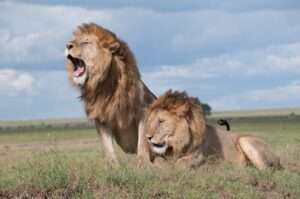
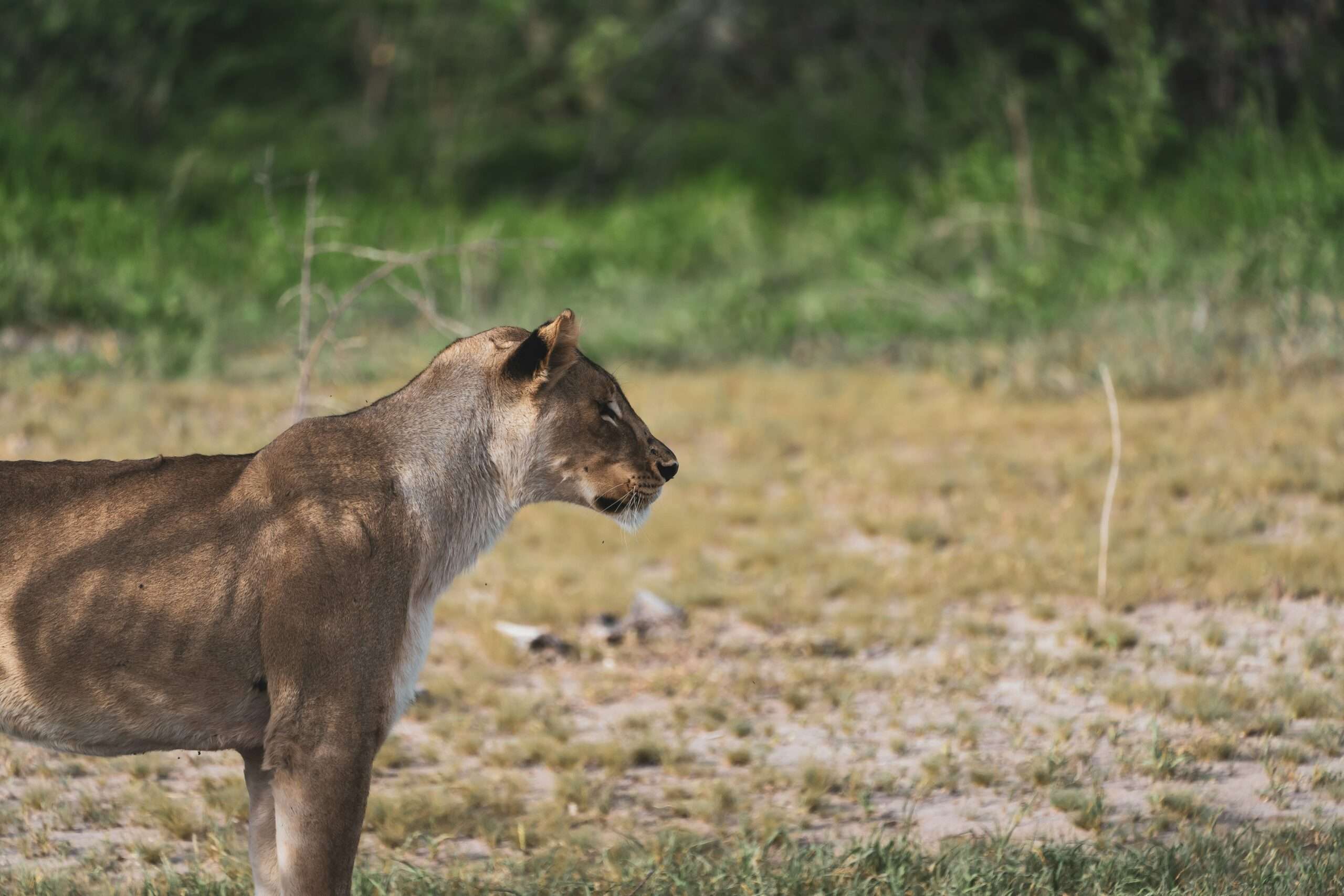
Lions are among Moremi’s major predators.
Their movements are influenced by prey availability, territory, water, and pride dynamics. Early morning and late afternoon can be productive periods for observation, although there is no fixed rule about when lions will be visible.
Leopard
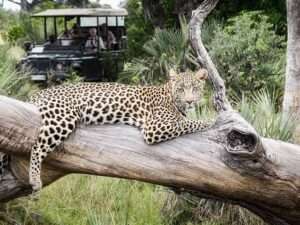
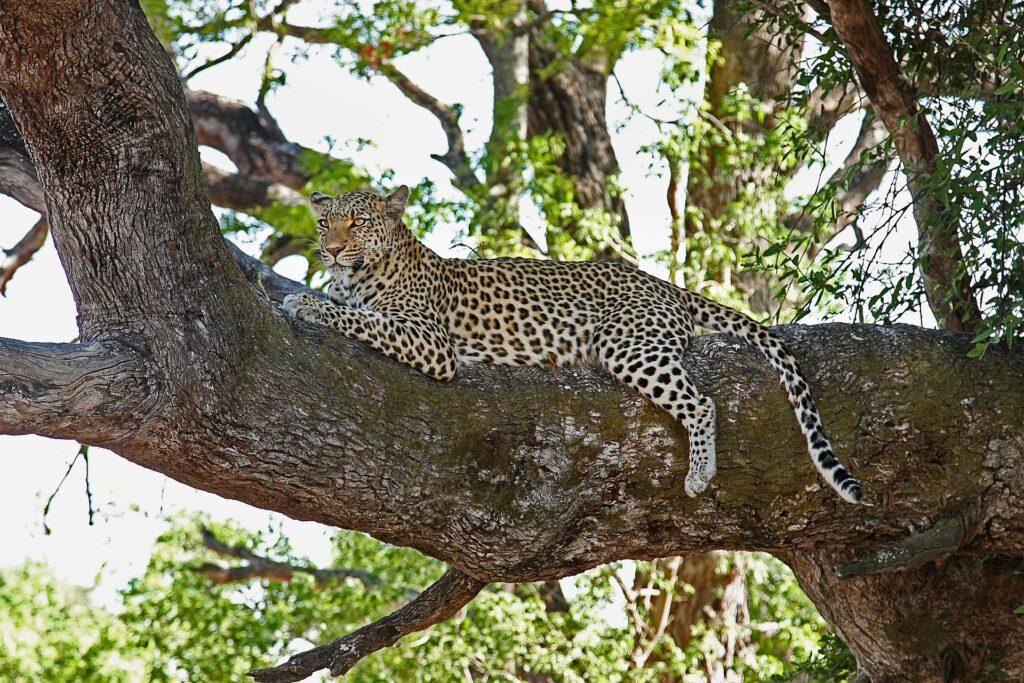
Leopards are generally more difficult to find than lions because they are solitary and often use dense vegetation or trees for cover.
Finding one is a combination of experience, tracking, patience, and luck.
Rhinoceros
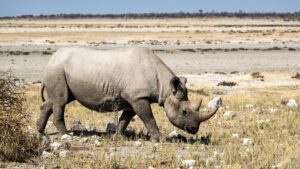
Rhino reintroduction has strengthened Moremi’s importance as a conservation landscape. Sightings remain less predictable than some of the more widespread species, and responsible operators should never pressure animals or guides simply to obtain a photograph.
The Big Five should therefore be treated as an indication of the ecological richness of the area, not as a promise attached to your safari booking.
African Wild Dogs and Predators in Moremi
African wild dogs are one of the species that can make a Moremi Botswana safari particularly exciting for serious wildlife enthusiasts.
The Okavango region is an important stronghold for this endangered species, and Moremi and neighboring areas can offer good opportunities to encounter them.
Wild dogs are highly social predators that live in packs and can cover considerable distances.
This is where a guide’s local knowledge becomes important.
A pack seen several kilometers away yesterday may be somewhere completely different today. Their movements can be influenced by prey, denning periods, pack dynamics, and competition with other predators.
When wild dogs are found, the sighting can develop quickly.
They may be resting in the shade one moment and moving with purpose the next.
For photographers, this creates both opportunities and challenges. Fast-moving dogs require quick shutter speeds, good positioning, and an understanding of where the pack is likely to move.
Other predators
Moremi and surrounding habitats can also support:
- Lion
- Leopard
- Cheetah
- Spotted hyena
- African wild dog
- Serval
- Caracal
- Genets
- Other smaller carnivores
Predator sightings are often shaped by prey distribution.
If large numbers of herbivores concentrate around particular habitats because of water or food, predators may respond to those opportunities.
This is another reason why I prefer to explain Moremi as an ecosystem rather than simply a collection of animal species.
Safari Activities in Moremi
One of the most important planning questions is what you actually want to do during your safari.
The answer depends on where you stay.
Activities available inside Moremi Game Reserve are not necessarily identical to those offered by camps in the surrounding private concessions.
The distinction matters.
Game Drives
For most visitors, the 4×4 game drive is the foundation of a Moremi Game Reserve safari.
Game drives allow you to cover larger areas and search different habitats.
A typical drive may include open floodplains, woodland, riverine areas, and tracks through varying terrain.
The best approach is not simply to drive continuously.
Good safari guiding involves stopping to examine tracks, listening for alarm calls, watching birds, checking likely areas, and allowing the landscape to tell you what is happening.
Game drives are also excellent for photography because the vehicle provides a stable shooting platform and allows you to work from different angles.
In Moremi, driving conditions can change considerably according to rainfall and water levels. Tracks that are accessible in one period may become difficult or unsuitable later.
Boat Safaris
Boat excursions provide a completely different perspective.
Instead of looking across the landscape from a vehicle, you move through the water system itself.
Depending on location and seasonal water conditions, boat trips can provide opportunities to observe hippos, crocodiles, waterbirds, and other wildlife associated with waterways.
Boating also changes the rhythm of a safari.
The sound of the engine, the movement of the boat, and the reflections on the water create a very different photographic environment.
Some Moremi-area camps and surrounding Delta concessions offer boating, but it is important to confirm this before booking because water activities are often dependent on the specific location and water levels.
Mokoro Experiences
The mokoro is one of the most distinctive ways to experience the Okavango wetlands.
Traditionally, the mokoro is a narrow dugout canoe. Today, many operators use modern composite versions for conservation and practical reasons.
A mokoro moves quietly through shallow channels and floodplains.
The experience is less about covering distance and more about slowing down and observing.
You may see aquatic plants, dragonflies, frogs, waterbirds, and antelope along the water’s edge.
The availability of mokoro excursions depends heavily on water conditions and the location of the camp or operating area.
It is therefore important not to assume that every property marketed as a “Moremi safari” automatically offers a mokoro excursion.
Walking Safaris
Walking provides another perspective on the ecosystem.
On foot, you notice things that can easily be missed from a vehicle: tracks, insects, plants, smaller animals, dung, calls, and subtle changes in the landscape.
However, walking availability varies considerably.
Walking activities are more commonly associated with private concessions surrounding Moremi, where operating rules can be more flexible. Moremi Game Reserve itself has more restrictions on activities than many private concessions.
For this reason, when someone tells me they specifically want a walking safari, I look at the entire itinerary rather than simply selecting a camp because it has “Moremi” in its name.
Best Time to Visit Moremi Game Reserve
There is no single month that is objectively best for every traveler.
The right time depends on what you want from your Moremi safari tours.
Broadly, Botswana’s safari year moves between a drier period and a greener, wetter period, but the Okavango is more complicated because the annual flood arrives independently of local rainfall.
That is one of the most interesting aspects of the ecosystem.
General seasonal guide
| Period | What you may experience |
| May–June | Green landscapes gradually dry, floodwaters begin influencing parts of the Delta, and wildlife viewing can be excellent. |
| July–October | Generally dry conditions, strong wildlife viewing around reliable water, cooler mornings and hot afternoons |
| November–December | Increasing rainfall in many years, greener vegetation, newborn animals, and excellent bird activity |
| January–March | Green season, variable rainfall, lush vegetation, strong birding and dramatic landscapes |
| April | During the transition period, greener conditions gradually begin changing as the dry season approaches. |
These are broad patterns rather than guarantees. Botswana’s rainfall and flood cycles vary from year to year.
Moremi Game Reserve During the Dry Season
The dry season is popular for a reason.
As surface water becomes less widespread across many parts of the landscape, animals often become more closely associated with reliable water sources.
This can make wildlife easier to locate in some areas.
Vegetation also becomes less dense, improving visibility in certain habitats.
For photographers, the dry season can offer strong light, dust, golden grasses, and clean backgrounds.
Mornings can be cold, particularly during the cooler part of the dry season, so warm layers are essential for early game drives.
By afternoon, temperatures can rise considerably.
Why wildlife viewing can be productive
The important point is not that animals simply “come to the river.”
Different species respond differently to water availability.
Some animals remain in particular habitats because food is still available there. Others move more widely.
Predators may follow prey.
Elephants may travel considerable distances between feeding areas and water.
A skilled guide uses these relationships to decide where to search.
The Okavango flood
The Okavango flood creates an unusual seasonal pattern.
Water entering Botswana originates from rainfall in the Angolan highlands, and the flood pulse travels southward into the Delta. Consequently, the period of highest water in parts of the Okavango does not necessarily coincide with Botswana’s rainy season.
This is one of the reasons that an Okavango safari can remain productive during the dry months.
Moremi During the Green Season
The green season is often misunderstood.
Some travelers see the word “rainy season” and assume that safari conditions will be poor.
That is not necessarily the case.
When rains arrive, Botswana can change dramatically.
The landscape becomes greener. Vegetation responds quickly. Migratory birds return or become more active in many areas. Young animals may be seen, and thunderstorms can produce spectacular skies.
There can also be fewer visitors during some parts of the green season.
For photographers, this period can be excellent.
Green grass, storm clouds, reflections, and fresh vegetation can create images with much more color and atmosphere than the dry-season palette.
What are the disadvantages?
Rain can make some tracks muddy.
Dense vegetation can reduce visibility.
Wildlife may be more dispersed when food and water are widely available.
Some activities or routes may be affected by local conditions.
None of these means that the safari is poor. It simply means that the experience is different.
If you are primarily interested in photography, birding, landscapes, or seeing Botswana at its greenest, the wetter months can be extremely rewarding.
Moremi and the Okavango Delta
This is one of the most important distinctions in this entire guide.
Moremi Game Reserve is part of the Okavango Delta. The Okavango Delta is much larger than Moremi.
The Delta includes the Moremi Game Reserve as well as private concessions, community areas, and other landscapes.
Botswana Tourism describes the Okavango as an extensive inland delta made up of interconnected wetland and dryland environments.
Moremi sits within this larger ecological system.
This means wildlife does not recognize the boundaries on a tourist map in the same way people do.
An elephant does not stop moving because it has reached the edge of a reserve.
A wild dog pack may travel between areas.
Predators and herbivores use the wider landscape according to their ecological needs.
Why the distinction matters for travelers
Suppose you book a safari advertised as an “Okavango Delta safari.”
That could mean a stay inside Moremi.
It could mean a private concession.
It could mean a community concession.
It could mean a camp focused primarily on water activities.
It could also mean a land-based camp where the main activity is 4×4 game driving.
These are very different experiences.
When planning, always ask exactly where the camp is located and which activities are operated from that location.
Private concessions surrounding Moremi often provide additional flexibility, including activities such as walking, night drives, mokoro excursions, and boating, depending on the concession and camp.
Where to Stay in Moremi Game Reserve
There is no single accommodation style that suits everyone.
Your choice should depend on your budget, comfort requirements, desired activities, and preferred safari atmosphere.
Permanent safari camps and lodges
These are suitable for travellers who want comfortable accommodation combined with guided safari activities.
Some properties are relatively intimate, while others offer more extensive facilities.
The important question is not simply whether a property is described as luxury or classic safari.
Ask:
- Where exactly is the camp?
- Is it inside Moremi or in a surrounding concession?
- What activities are available?
- Are water activities seasonal?
- Are walking safaris available?
- Are night drives available?
- How are transfers arranged?
- What is included in the rate?
Mobile camping
Mobile safaris can provide a more traditional wilderness experience.
Accommodation is generally simpler than a high-end permanent lodge, but the advantage can be the feeling of travelling through the wilderness rather than staying in one permanent property.
For travellers who value authenticity, flexibility, and being close to nature, mobile camping can be an excellent choice.
Private concessions
Private concessions surrounding Moremi can offer a different style of safari.
Many operate with controlled vehicle numbers and can provide activities that are more restricted inside the reserve.
This can be particularly attractive to photographers, walking enthusiasts, and travelers who want night drives.
However, private concessions generally come at a higher cost because the tourism model is based on relatively low visitor density and higher-value experiences.
How Many Days Do You Need in Moremi?
I generally recommend at least three nights if Moremi is an important part of your Botswana itinerary.
Two nights can work if you have limited time, but the experience can feel rushed once transfers are considered.
Two nights
Suitable for:
- Short Botswana itineraries
- Travellers combining several destinations
- Visitors with limited time
Three to four nights
This is a much better starting point.
You have enough time for several game drives and, depending on your location, potentially a water-based activity.
It also gives you more opportunities to encounter different habitats and changing wildlife activity.
Five nights or longer
Ideal for:
- Serious wildlife enthusiasts
- Photographers
- Birdwatchers
- Travellers who prefer slower safaris
- Families wanting a less rushed itinerary
The advantage of staying longer is not simply seeing more animals.
It gives you time to understand the ecosystem.
You can spend one morning concentrating on predators, another on birdlife, another exploring waterways, and another simply following the day’s best wildlife activity.
Moremi Safari Cost
There is no single fixed price for a Moremi Game Reserve safari.
The cost can vary substantially depending on how the safari is designed.
The main factors include:
Accommodation
Luxury tented camps and high-end lodges can cost considerably more than mobile camping or simpler accommodation.
Season
Safari rates often change between low, shoulder, and high seasons.
Peak wildlife periods can attract higher accommodation rates.
Safari style
A private guided safari, scheduled departure, mobile safari, or self-drive trip will have different cost structures.
Activities
Game drives may be included in a camp rate, while specialist activities or transfers may have different arrangements.
Transfers
The cost and logistics of reaching remote camps can have a significant impact on the total safari price.
Vehicle arrangements
A private vehicle gives you more control over your schedule and photography requirements, but naturally increases the overall cost compared with sharing.
Park and conservation costs
Protected-area fees, conservation levies, and other charges may form part of the safari cost or be listed separately, depending on the operator and accommodation.
For this reason, I do not recommend comparing safari prices simply by looking at the headline price per person.
Two apparently similar packages can include very different things.
Always compare the complete itinerary, accommodation, transfers, activities, and inclusions.
Photography in Moremi Game Reserve
Moremi is an outstanding destination for wildlife photography, but good photography starts with understanding animal behavior and light rather than simply carrying a large lens.
Use the early and late light.
The first and last hours of daylight generally offer the most attractive light.
Early morning often produces softer illumination and longer shadows.
Late afternoon can provide warm tones and backlighting.
The middle of the day can still produce excellent photographs, particularly around water, under clouds, or when interesting behavior occurs.
Do not put your camera away simply because the sun is high.
Lens selection
For a general wildlife safari, a telephoto zoom gives flexibility.
A longer focal length is useful for distant animals and smaller subjects.
A wider lens becomes valuable when an animal approaches close or when you want to show the animal within its environment.
If you are serious about photography, I recommend carrying two camera bodies where possible. This reduces the need to change lenses in dusty conditions and allows you to react quickly when wildlife behavior changes.
Vehicle positioning
Good positioning is not about getting as close as possible.
The best position is often the one that gives you:
- Clean background
- Good light
- Clear line of sight
- Appropriate distance
- Space in front of the animal
- Minimal disturbance
A skilled guide should consider the animal’s behavior as well as the photographer’s composition.
Ethical photography
Never pressure a guide to drive off a permitted track simply to obtain a photograph.
Never encourage a driver to crowd an animal.
Do not call, whistle at, or otherwise disturb wildlife to make it look toward the camera.
The photograph should be secondary to the animal’s welfare.
Some of the strongest wildlife photographs are made when the animal is simply behaving naturally.
Planning Your Moremi Safari
Good planning makes a significant difference to the quality of the safari.
Start with your priorities
Before choosing accommodation, decide what matters most.
Are you primarily interested in:
- Predators?
- African wild dogs?
- Elephants?
- Birding?
- Photography?
- Water activities?
- Walking?
- Family travel?
- Luxury accommodation?
- Mobile camping?
- A private safari vehicle?
There is no single perfect Moremi itinerary.
The best itinerary is the one that matches your priorities.
Think about the whole route.
Moremi is often combined with other Botswana destinations.
A well-designed Botswana safari may include Moremi together with destinations such as Chobe, Savuti, Khwai, the Okavango’s private concessions, or the Makgadikgadi region.
The point is not to collect as many destinations as possible.
Too many transfers can reduce the amount of time you actually spend on safari.
I would rather have a traveller spend four meaningful nights in a strong wildlife area than spend every second day packing bags and moving to another camp.
Understand your transfers
Remote Botswana safari camps often require light-aircraft transfers or specialized road transfers.
Before booking, make sure you understand:
- Where your safari begins
- Where the camp is located
- How you will reach it
- Whether transfers are included
- Luggage restrictions
- Transfer timing
- Whether road conditions may affect travel
Do not leave these details until the last week before departure.
Choose the operator carefully.
A safari company should be able to explain the practical details clearly.
Ask who will guide you, whether the vehicle is shared or private, what activities are available, and what is included.
A good operator should also be honest about wildlife.
If someone guarantees that you will see a leopard, cheetah, or wild dog, I would be cautious.
No reputable guide controls the movements of wild animals.
What to Pack for a Moremi Safari
You do not need an enormous amount of luggage.
Practical clothing is more important than fashion.
Useful clothing
- Neutral-colored lightweight clothing
- Warm layers for early morning drives
- Comfortable trousers
- Long-sleeved shirts
- Sun hat
- Comfortable closed shoes
- Light rain protection during wetter periods
- Warm jacket for cold mornings
Photography equipment
- Camera body
- Telephoto lens
- General-purpose lens
- Extra batteries
- Memory cards
- Lens cloth
- Dust protection
- Binoculars
Personal items
- Sunscreen
- Sunglasses
- Insect repellent
- Personal medication
- Reusable water bottle
- Small day bag
- Headlamp or torch where appropriate
Always check your operator’s luggage requirements before packing, particularly if your itinerary includes small aircraft transfers.
Moremi Safari for Families
Moremi can work very well for families, but the itinerary should be designed around the ages and interests of the children.
Long game drives may not suit very young children.
A private vehicle can make a major difference because the family has more control over the daily rhythm.
Older children and teenagers can become deeply interested in tracking, photography, and identifying birds and mammals.
I also recommend explaining before arrival that a safari is not a zoo.
You may spend several hours looking for a particular animal and then suddenly have an extraordinary sighting.
That uncertainty is part of what makes a genuine wildlife safari different.
Moremi Safari for Birdwatchers
Birdwatchers should consider Moremi seriously.
The habitat diversity provides excellent opportunities for both water-associated and terrestrial species.
If birding is one of your main priorities, tell your safari operator before arrival.
A guide who knows that you want to spend time with birds can adjust the pace of the safari.
For a dedicated birder, stopping for a small kingfisher can be just as important as stopping for an elephant.
This is one area where communication with your guide makes a real difference.
Responsible Tourism in Moremi
Moremi exists because people recognized the need to protect wildlife and habitat.
Tourism therefore has a responsibility to support that conservation framework.
When visiting, simple behavior matters.
Respect wildlife.
Maintain appropriate distances.
Never attempt to touch wild animals.
Do not feed wildlife.
Do not pressure guides to disturb animals for photographs.
Respect the landscape.
Remain on permitted tracks where required.
Do not remove plants, rocks, or other natural objects.
Take rubbish with you or dispose of it properly.
Use water responsibly.
Support local communities.
Where possible, choose operators and tourism businesses that contribute to local employment and community-based conservation.
Botswana’s conservation model depends not only on protected landscapes but also on the relationship between wildlife, communities, and tourism.
Tourism works best when local people have a genuine reason to support the continued protection of wildlife.
Moremi Game Reserve vs. Private Concessions
This comparison is worth understanding before you book.
| Feature | Moremi Game Reserve | Private Concession |
| Protection status | Government-managed game reserve | Usually leased/managed concession |
| Game drives | Main safari activity | Game drives are widely available. |
| Off-road driving | More restricted | Often permitted under concession rules |
| Night drives | Generally restricted | Often available |
| Walking | More limited | Common at suitable properties |
| Mokoro | Available in appropriate areas/arrangements | Common in suitable water areas |
| Boating | Available in suitable locations | Often available |
| Visitor density | Can be higher at popular sightings | Generally more controlled |
| Self-drive | Possible in designated areas | Generally not the normal approach |
| Safari style | Classic protected-area safari | More flexible, often more exclusive |
The exact rules depend on the location and operator, so travelers should always confirm current activity arrangements before booking. Moremi has greater activity restrictions than many private concessions, while surrounding concessions often provide more flexibility.
Practical Moremi Safari Tips
1. Do not judge the safari by the first game drive.
Sometimes the first drive produces elephants, buffalo, and predators.
Sometimes it produces tracks, birds, and beautiful landscapes.
The wilderness does not operate on a schedule.
2. Listen to your guide.
A guide’s job is not simply to drive.
Listen when your guide explains tracks, calls, habitat, and animal behavior.
You will begin to understand why the vehicle stops in apparently empty places.
3. Give wildlife time.
A leopard hidden in vegetation may become visible after ten minutes.
A pride of lions may sleep for hours before becoming active.
Patience often produces better sightings than rushing.
4. Do not overpack.
Remote safari travel is easier when your luggage is manageable.
5. Carry binoculars.
Binoculars are useful even when you have a long camera lens.
They are particularly valuable for birds and distant wildlife.
6. Tell your guide what interests you.
If you are a photographer, birder, or predator enthusiast, say so.
A good guide can adapt the safari accordingly.
7. Allow flexibility
Weather, water levels, and wildlife movements can change plans.
Flexibility is part of safari travel.
Conclusion: Planning a Moremi Game Reserve Safari
A Moremi Game Reserve safari is best understood as a journey through a changing ecosystem rather than a simple search for famous African animals.
The reserve’s real strength is the relationship between water and land.
Permanent channels meet seasonal floodplains. Wetlands give way to woodland. Open grasslands provide feeding grounds while thicker vegetation offers cover. Wildlife moves through these habitats according to water, food, weather, and natural behavior.
That is why no two safaris are exactly alike.
One day may be dominated by elephants around water. Another may bring a leopard in woodland, wild dogs moving through open country, or a quiet afternoon surrounded by birds and floodplain scenery.
For international travellers, the most important decision is not simply when to visit Moremi.
It is deciding what type of safari you want.
If wildlife photography is your priority, we can build the itinerary around light, time in the field, and suitable locations.
If you want predators and African wild dogs, we can consider areas known for strong predator habitats.
If you want water experiences, we can look carefully at seasonal water levels and camps that provide boating or mokoro activities.
If walking is important, we can consider private concessions where walking is available.
And if you are visiting Botswana for the first time, we can combine Moremi with other destinations so that you experience more than one side of the country.
The best safari is not necessarily the one with the longest list of activities or the highest price.
It is the one that is planned around your interests, the season, the landscape, and the way Botswana actually works.
Plan Your Moremi Safari with Savanna Safaris and Tours
At Savanna Safaris and Tours, we can help you plan a personalised Moremi Game Reserve safari around your travel dates, wildlife interests, preferred activities, accommodation style, and budget.
Whether you are a first-time safari traveller, an experienced wildlife enthusiast, photographer, birdwatcher, couple, family, or private group, the itinerary should be built around what you genuinely want to experience.
Contact Savanna Safaris and Tours to discuss your Moremi safari and let us help you create an itinerary that fits the way you want to travel through Botswana.
The Okavango is not a destination that needs exaggerated promises. The landscape, wildlife, and silence speak for themselves. The role of a good safari company is to help you experience that wilderness properly, safely, and responsibly.