
Best Time to Visit Chobe: A Guide from the Field
After many seasons guiding guests across northern Botswana, one question comes up on almost every first evening around the campfire:
“When is the best time to visit Chobe?“
The honest answer is that Chobe changes dramatically throughout the year, and each season offers something different. There is no single month that is perfect for everyone.
If your priority is large elephant herds gathering along the river, the dry season is often the answer. If you enjoy bird photography, green landscapes, dramatic skies, and fewer vehicles, the rainy season can be remarkably rewarding. Families, photographers, couples, and first-time safari travelers may all prefer different months.
Chobe National Park is one of Africa’s great wildlife destinations, but understanding its seasons will have a greater impact on your experience than almost any other planning decision. Choosing the right time affects wildlife density, vegetation, photography conditions, temperatures, road conditions, and even the type of safari activities available.
This guide is based on practical experience guiding visitors in Botswana and helping travelers plan realistic itineraries rather than idealized ones.
Quick Overview: Best Time to Visit Chobe National Park
| Travel Goal | Recommended Time |
| Highest concentration of wildlife | July to October |
| Elephant viewing | August to October |
| Boat safaris on the Chobe River | May to October |
| Wildlife photography | May to September |
| Birdwatching | November to April |
| Green landscapes and dramatic skies | December to March |
| Fewer visitors | January to March |
| First-time Botswana safari | June to October |
| Family travel with comfortable temperatures | May, June, and July |
For most first-time visitors, June through October is generally considered the best time to visit Chobe National Park because wildlife becomes easier to find as water sources shrink and animals gather near the Chobe River.
However, that does not mean the green season should be overlooked.
Understanding Chobe’s Seasons
Botswana does not experience four distinct seasons in the way many travelers from Europe or North America expect. Instead, Chobe is broadly divided into:
- Dry season (May to October)
- Green or rainy season (November to April)
These seasonal changes shape the entire safari experience.
The Chobe River remains one of the few permanent water sources in the region. During the dry months, wildlife concentrates around it. During the rainy season, animals disperse more widely across the landscape as temporary water becomes available.
This movement is natural. Wildlife does not disappear in the wet season, but sightings often require more patience and longer game drives.
Dry Season: May to October
For many travelers, this is the period that defines the classic Chobe safari.
Vegetation becomes thinner. Grass shortens. Water is limited. Wildlife moves toward permanent rivers and reliable drinking areas.
This makes animal sightings more consistent, especially along the Chobe Riverfront.
May and June: The Transition into the Dry Season
After the rains, the landscape still holds some greenery, but visibility steadily improves.
These months are excellent for travelers who want:
- Pleasant temperatures
- Comfortable game drives
- Good photography conditions
- Fewer crowds than peak season
- A balance between green scenery and wildlife viewing
Morning drives can feel surprisingly cold, particularly in open safari vehicles.
Layered clothing is important.
Wildlife sightings are already improving, and boat safaris often become increasingly productive as animals spend more time near the river.
July and August: Prime Wildlife Viewing
By July, the bush has thinned significantly.
Animals are easier to spot.
Elephants, buffalo, antelope species, and predators often spend more time near permanent water sources. Along the Chobe Riverfront, it is common to encounter large concentrations of wildlife over the course of a day.
This period is especially rewarding for first-time safari travelers because visibility is excellent.
Predator sightings can also improve because shorter vegetation allows guides to detect tracks and movement more easily.
That said, no reputable guide should ever guarantee sightings.
Wildlife remains wild, and every game drive is different.
September and October: Elephant Season
If your primary reason for visiting Chobe is to see elephants, late dry season is often the strongest period.
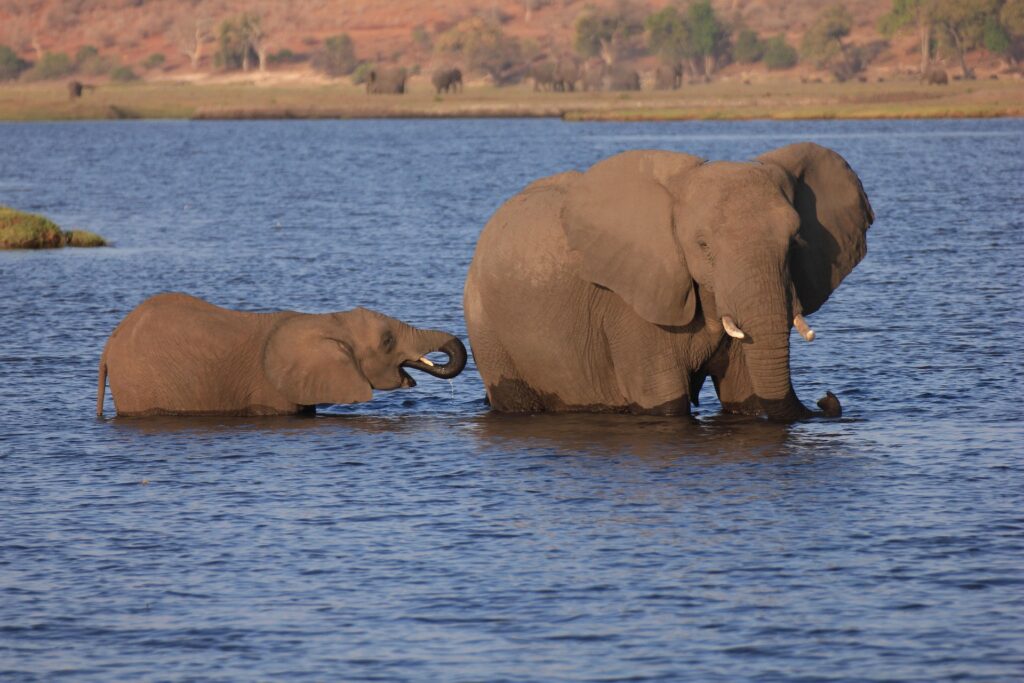
Chobe is home to one of Africa’s largest remaining elephant populations, and during the hottest months many herds spend significant time along the river.
Seeing multiple family groups moving to water, crossing channels, or drinking along the riverbanks is common during this period.
The heat, however, becomes intense.
Daytime temperatures regularly climb well above comfortable levels, especially in October.
Midday activity can slow down, which is one reason early morning and late afternoon game drives remain so productive.
Why the Dry Season Is So Popular
Advantages
- Excellent wildlife visibility
- Consistent game viewing
- Easier wildlife photography
- Productive boat safaris
- Cooler conditions earlier in the season
- Ideal for first-time safari visitors
Considerations
- Peak season rates are often higher.
- Popular areas may feel busier.
- Vegetation is less green.
- Dust becomes more noticeable later in the season.
Green Season: November to April
Many travelers assume the rainy season is a poor time to visit Botswana.
That is not my experience.
The green season simply offers a different safari.
The bush transforms. Migratory birds arrive. Young animals begin appearing. Thunderstorms build dramatic skies across the floodplains. Photography can be exceptional.
Game viewing may require more patience, but there are unique rewards.
November and December: First Rains
The first storms often arrive with relief after months of heat.
Fresh grass appears quickly.
Animals begin dispersing from the riverfront as water becomes available elsewhere.
This period can be particularly beautiful for photographers because:
- Landscapes regain color.
- Clouds add depth to images.
- Dust decreases.
- Sunrises and sunsets can become more dramatic.
Young antelope are also more common during this period.
Predators remain active, although sightings may require longer searches because prey species are spread across wider areas.
January to March: Peak Green Season
These months bring the greatest chance of heavy rainfall.
Road conditions in some areas may become challenging, especially away from major routes.
However, birdwatchers often consider this one of the finest periods in northern Botswana.
Migratory species arrive from Europe and elsewhere, adding to the already impressive resident birdlife.
Herons, storks, bee-eaters, kingfishers, eagles, and countless waterbirds create extraordinary opportunities for photographers and bird enthusiasts.
The scenery is also at its most vibrant.
If your dream safari involves green landscapes rather than dry golden plains, this season deserves consideration.
April: The Quiet Transition
April is often overlooked.
In reality, it can be an excellent compromise.
Rainfall usually begins to decrease.
The landscape remains green.
Temperatures become more comfortable.
Visitor numbers are often lower than peak dry season.
Wildlife viewing steadily improves as the season changes.
Month-by-Month Guide
| Month | Wildlife Viewing | Birding | Photography | Visitor Numbers |
| January | Fair | Excellent | Excellent landscapes | Low |
| February | Fair | Excellent | Excellent landscapes | Low |
| March | Fair to good | Excellent | Excellent landscapes | Low |
| April | Good | Very good | Very good | Moderate |
| May | Good | Good | Excellent | Moderate |
| June | Very good | Good | Excellent | Increasing |
| July | Excellent | Good | Excellent | High |
| August | Excellent | Good | Excellent | High |
| September | Excellent | Good | Excellent | High |
| October | Excellent | Fair | Very good | High |
| November | Good | Very good | Excellent | Moderate |
| December | Good | Excellent | Excellent | Moderate |
Chobe Riverfront vs Other Areas
When discussing the best time to visit Chobe National Park, it helps to understand that the park is not a single uniform ecosystem.
Most first-time visitors spend time in the Chobe Riverfront region near Kasane.
This area is famous for:
- Boat safaris
- Elephant concentrations
- Riverfront game drives
- Buffalo herds
- Excellent dry-season wildlife viewing
Other regions, such as Savuti, can offer very different experiences.
Savuti is known for predator activity and changing water conditions, but wildlife patterns can vary significantly depending on rainfall and local environmental conditions.
This is why broader Botswana itineraries often combine multiple ecosystems rather than focusing on only one area.
Best Time for Boat Safaris
Boat safaris are one of the defining experiences in Chobe.
Unlike game drives, boats allow you to observe wildlife at water level without dust and often with excellent light.
The most productive months are generally:
- May to October
During the dry season, elephants, buffalo, antelope, crocodiles, and numerous bird species frequently use the river throughout the day.
Late afternoon cruises are particularly rewarding because softer light creates better photographic conditions.
Boat safaris can still operate during the green season, and birdlife is often exceptional, but wildlife densities along the river may be less concentrated.
Best Time for Wildlife Photography
As both a guide and wildlife photographer, I usually divide Chobe photography into two categories.
Dry Season Photography
Best for:
- Mammal photography
- Elephant images
- Predator photography
- Dust-lit backlighting
- Riverfront scenes
Recommended lenses:
- 100–400mm
- 200–600mm
- 300mm or longer prime lenses
Green Season Photography
Best for:
- Bird photography
- Landscapes
- Storm clouds
- Dramatic skies
- Calving season subjects
- Environmental wildlife images
A wider lens becomes more useful during this period because the scenery itself becomes part of the story.
Ethical Wildlife Photography
A few principles matter far more than camera equipment.
Never pressure guides to approach animals too closely.
Never encourage drivers to block an animal’s movement.
Avoid repeated flash photography.
Patience almost always produces stronger photographs than aggressive positioning.
Respectful viewing is also better conservation practice.
Best Time for Families
Families often do well during:
- May
- June
- July
Temperatures are generally comfortable.
Mosquito activity may be lower than during wetter months.
Game viewing is good.
Long drives are usually easier for children in cooler weather.
Families with very young children should always confirm minimum age requirements for activities such as walking safaris or mokoro excursions elsewhere in Botswana, as policies vary between operators and camps.
Best Time for Couples
Couples often have different priorities.
Many enjoy:
- April
- May
- November
- Early December
These shoulder months can offer:
- Beautiful scenery
- Fewer visitors
- Excellent photography
- A quieter atmosphere
Wildlife viewing remains rewarding while avoiding some of the busiest periods.
Conservation and Responsible Travel
Chobe’s wildlife exists because large landscapes remain protected and because local communities continue to play important roles in conservation and tourism.
Responsible safari travel helps support:
- Protected areas
- Community employment
- Local guiding careers
- Anti-poaching efforts
- Conservation-based tourism economies
Small decisions matter.
Stay on designated routes.
Follow your guide’s instructions.
Keep noise levels low near wildlife.
Respect viewing distances.
Good safari etiquette improves the experience for both people and animals.
Practical Travel Tips
Before visiting Chobe:
Pack layers
Winter mornings can be cold even in Africa.
Bring binoculars
Good binoculars often improve a safari more than an expensive camera.
Use neutral-colored clothing
Earth tones generally work well for safari activities.
Protect equipment from dust
Dry season dust can affect cameras and lenses.
Avoid overpacking
Most travelers wear the same practical safari clothing repeatedly.
Allow enough time
Two nights is possible.
Three or four nights usually provide a more relaxed experience.
Conclusion: Best Time to Visit Chobe Depends on Your Priorities
When guests ask me about the best time to visit Chobe, I usually answer with another question:
“What do you most want to experience?”
If you want the highest concentration of wildlife and classic riverfront game viewing, the dry season from June to October is difficult to beat.
If you love birds, dramatic skies, green landscapes, and quieter safari experiences, the rainy season can be equally rewarding in very different ways.
The truth is that Chobe does not have a bad season.
It simply has changing seasons.
Understanding those changes allows you to choose the safari that fits your interests rather than following a generic recommendation.
Need Help Planning Your Botswana Safari?
Choosing the right season is only one part of building a successful itinerary. The best route, length of stay, activities, and combination of destinations often depend on your travel style, budget, photography interests, and the time of year you plan to visit.
The team at Savanna Safaris and Tours can help you plan a personalized Botswana safari based on realistic seasonal conditions and your specific priorities. Contact us for itinerary advice, travel planning assistance, and guidance on the best time to experience Botswana.